What’s on the shelf
around the corner?
Discover neighborhood libraries, browse their books, and help a shelf become easier to find. Photo-assisted cataloging makes a small act of sharing more useful to everyone.
Independent software. Shared tools. Community ideas.
We build tools that give people more control over their technology—and explore ideas that bring communities together. Try what’s taking shape, build on what we share, or bring a question of your own.
A working studio. Real projects. Still becoming.
01 / The work
Books, play, AI, and the work behind them. These are working betas and early experiments. Come try them—and tell us what you notice.
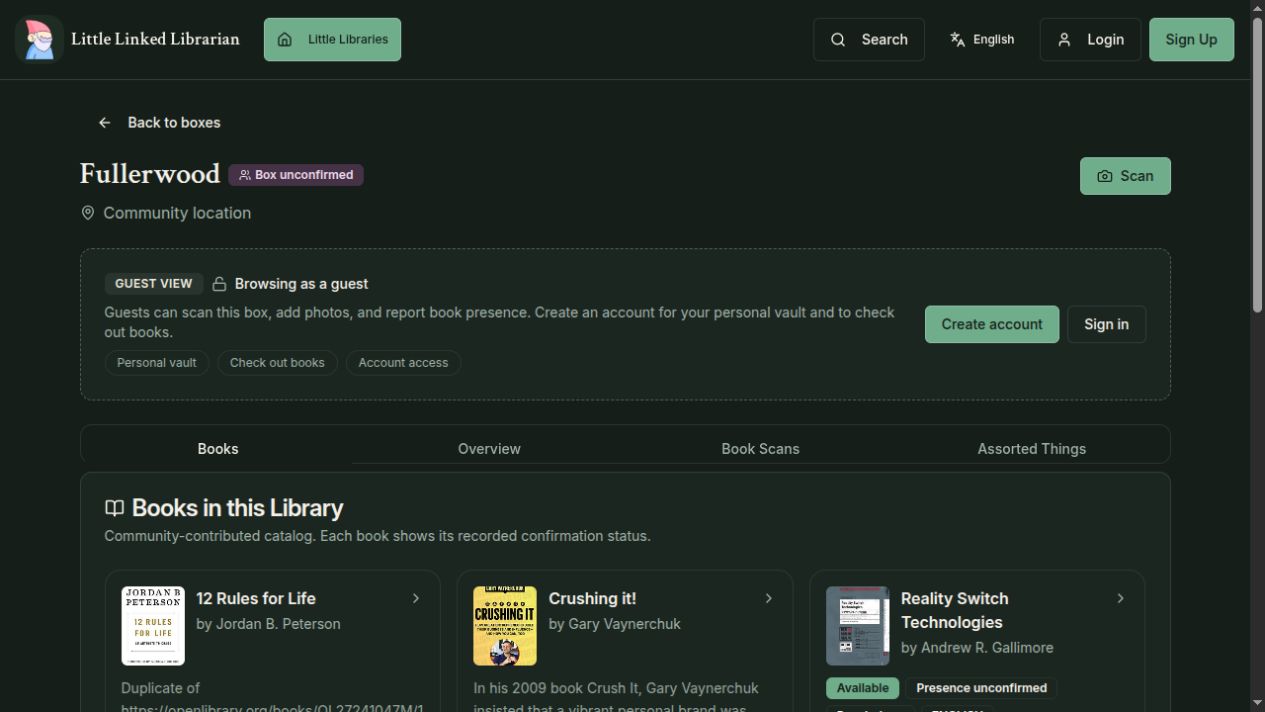
Discover neighborhood libraries, browse their books, and help a shelf become easier to find. Photo-assisted cataloging makes a small act of sharing more useful to everyone.
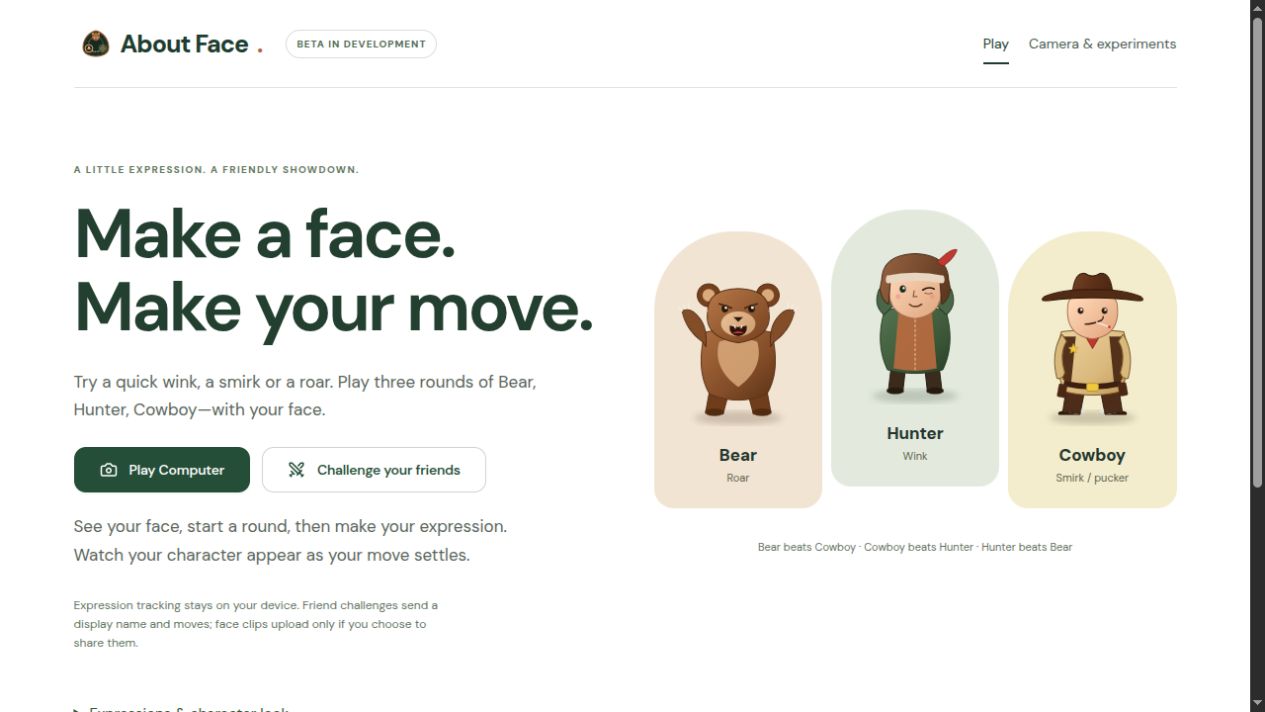
Play Bear, Hunter, Cowboy with your face. Take on the computer or send a friend a challenge. Expression tracking happens on your device; sharing a replay is your choice.
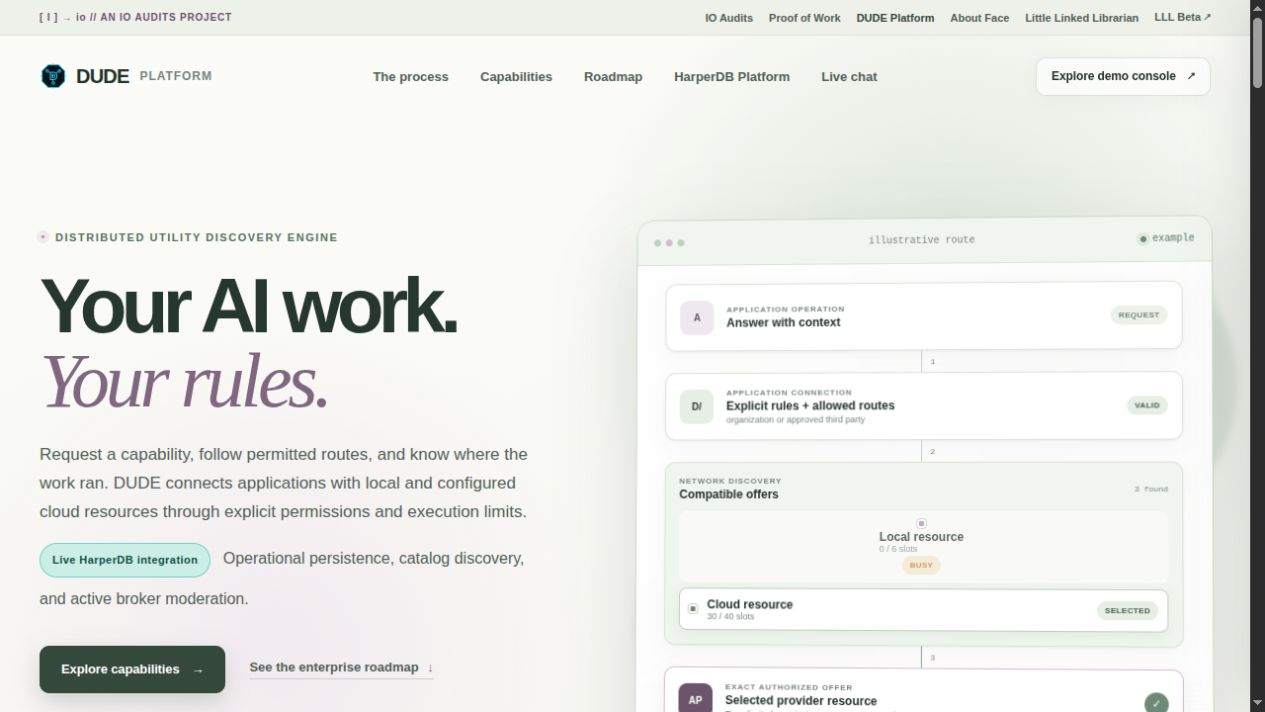
More choice over where AI work runs, what it can access, and how much it can use. DUDE connects applications to permitted local and cloud resources. Bring a real workflow to help shape the next pilot.
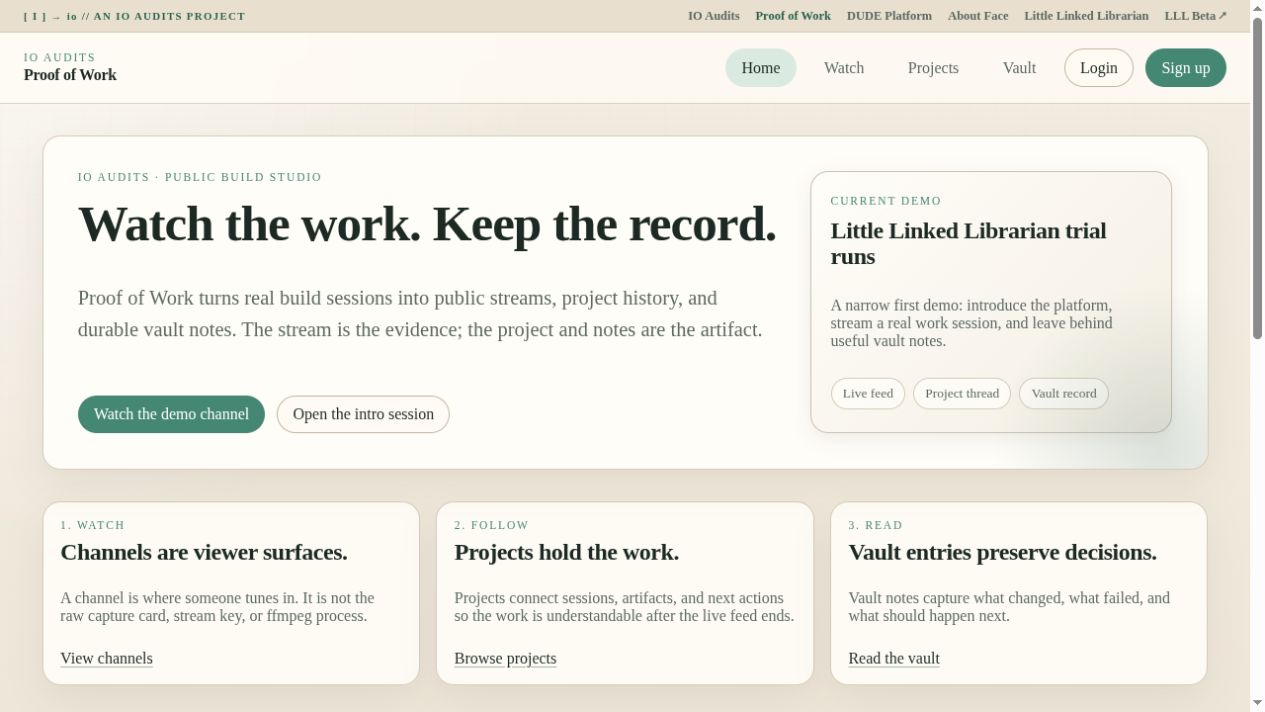
Follow the builds, the decisions, and the things that didn’t work the first time. Public sessions and project notes keep the story going after the stream ends.
Actual project screens, captured October 29, 2026. Interfaces will change as the work develops.
02 / The approach
Useful technology should leave you with more understanding and more choice. We build with that in mind, from the first question to the tools we share.
Start with the people, the problem, and what matters to them. Let that shape the work.
Keep decisions understandable. Test real workflows. Leave a trail someone else can follow.
As projects mature, release self-contained tools people can inspect, adapt, and run for themselves.
Our workspaces use human-reviewed Interpretable Context Methodology (ICM), adapted from Jake Van Clief and David McDermott’s ICM and Model Workspace Protocol. Plain-text stages keep intent, decisions, and checks beside the code.
Available now: the MIT-licensed LLL NodeKit and Network Nodes registry. Public kits cover their stated scope; they don’t reproduce every feature of our hosted betas. More tools follow as they prove ready.
A workspace for making contract documents easier to understand. Private rebuild; information, not legal advice.
A local-first scaffold for user-entered schedules and reminders. In development.
Early tools for gardens, shared growing, and neighborhood coordination.
A brand prototype exploring new uses for industrial hemp byproducts.
03 / Open inquiries
These ideas are still on the drawing board. They need local knowledge, operating partners, places to try things, and people who see the possibilities.
A place to work quietly, meet a neighbor, and make something happen together.
Explore lighter ways to live alongside restoration, public access, and coastal realities.
Turn an underused space into an afternoon of skating, music, and neighborhood life.
Repair, return, and reuse. What would it take to keep good materials in circulation?
Everyday staples, regional growers, and a stronger say in how a community feeds itself.
Local stories and independent voices, made into editions worth keeping.
04 / An open invitation
A fresh perspective, a practical skill, a pilot space, or support for a milestone. There’s more than one way to take part.
Watch a build, try a beta, and tell us what you notice. Curiosity is a good place to start.
Visit Proof of Work ↗Take a public kit, make it useful in your community, and give the next idea somewhere to begin.
Start with NodeKit ↗Bring a pilot, join a collaboration, or sponsor a specific next step. Let’s find something worth doing together.
Start a conversation ↗Sponsorships and pilot engagements are arranged around agreed milestones. Contributions are not tax-deductible charitable donations.